Santorini history: read the island through its places
Santorini’s history is easier to follow when you separate three ideas: the geological landscape, the prehistoric town at Akrotiri and the later ancient city of Thera. They are connected, but they are not the same place or the same period. Later fortified settlements, maritime houses and modern museum collections add further layers. This guide offers a practical framework for recognising those layers as you explore.
On this page
Keep the names and periods clear
A few similar names can create a surprisingly confusing itinerary. Thera is a historical name associated with the island; Ancient Thera is a particular archaeological site on Mesa Vouno. Fira is the present capital. Akrotiri can mean the modern village or the nearby prehistoric excavation. When arranging transport or looking for a ticket, specify the place you intend to reach.
This distinction also improves the history itself. The frescoes and urban remains associated with Akrotiri belong to a different world from the sanctuaries, theatre and public buildings at Ancient Thera. Treating them as one attraction can leave visitors with a muddled picture of both. A museum label or site plan is most useful when you already know which chapter of the island’s past it belongs to.
| Name | What it means for a visitor | Useful context |
|---|---|---|
| Prehistoric Akrotiri | An excavated town near modern Akrotiri village | Buildings and daily life before the eruption |
| Ancient Thera | A later city on Mesa Vouno | An ancient island city-state; current closure applies |
| Fira | Santorini’s modern capital | Museums, town life and caldera views |
| Museum of Prehistoric Thera | A museum in Fira | Objects and wall paintings that complement Akrotiri |
Akrotiri: a town rather than a single monument
The Ephorate of Antiquities describes settlement at Akrotiri from prehistoric times, with the excavated Late Cycladic town preserved under volcanic deposits. The visible remains include multi-storey buildings, organised streets and drainage. Household objects and the evidence of wall painting allow archaeology to ask questions about how people lived, worked and connected with other places.
For a visitor, the most rewarding question is often not “what is the oldest thing here?” but “how did this town work?” Follow a street, look at the relationship between buildings and think about the objects that once occupied them. The modern roof and viewing routes are part of the preservation and presentation of a fragile excavation, rather than the original setting of the town.
Be cautious with neat retellings of the eruption. Its exact dating and the fate of all inhabitants are not matters a short holiday article can settle. This guide uses the secure shared point that eruption deposits buried and preserved the town, without presenting a complete evacuation story as established fact.
Ancient Thera: a different landscape and a later city
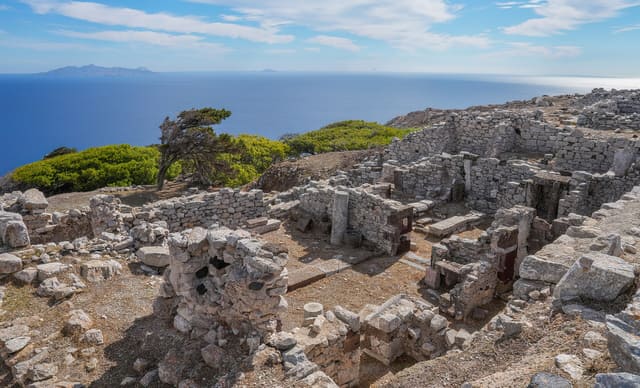
The later city occupies Mesa Vouno in the southeast of the island. The Ephorate places its foundation in the eighth century BC, with a long occupation extending into the medieval period. Its remains include places of worship, civic buildings and residential areas that reflect an organised city-state rather than the prehistoric settlement at Akrotiri.
The hilltop position helps explain why setting matters to historical interpretation. A site overlooking coast and cultivable land tells a different story from a roofed excavation near the southwest shore. You can understand that contrast through maps, museum material and the official site account even when an on-site visit is unavailable.
The official Hellenic Heritage notice checked on 4 November 2026 closes Ancient Thera from 27 June 2026 until further notice. Do not interpret a general seasonal timetable as a reopening announcement. Keep this chapter in your understanding of the island, but choose confirmed open places for a fixed itinerary.
Fortified villages and the caldera settlements
Santorini’s village fabric brings later history into everyday walking. Pyrgos and Emporio have fortified cores; Emporio’s enclosed passages, stairs and vaults make that character particularly tangible. In Imerovigli, the relationship with Skaros introduces another strand of the island’s settlement history.
A useful approach is to look at the form of a place before seeking a list of dates. Where does the route narrow? How do houses cluster? Where is the square or the prominent religious building? These questions turn a village stroll into an observation of how a settlement is arranged. They also help you appreciate the place without needing access to private houses or closed religious spaces.
Oia and the maritime story
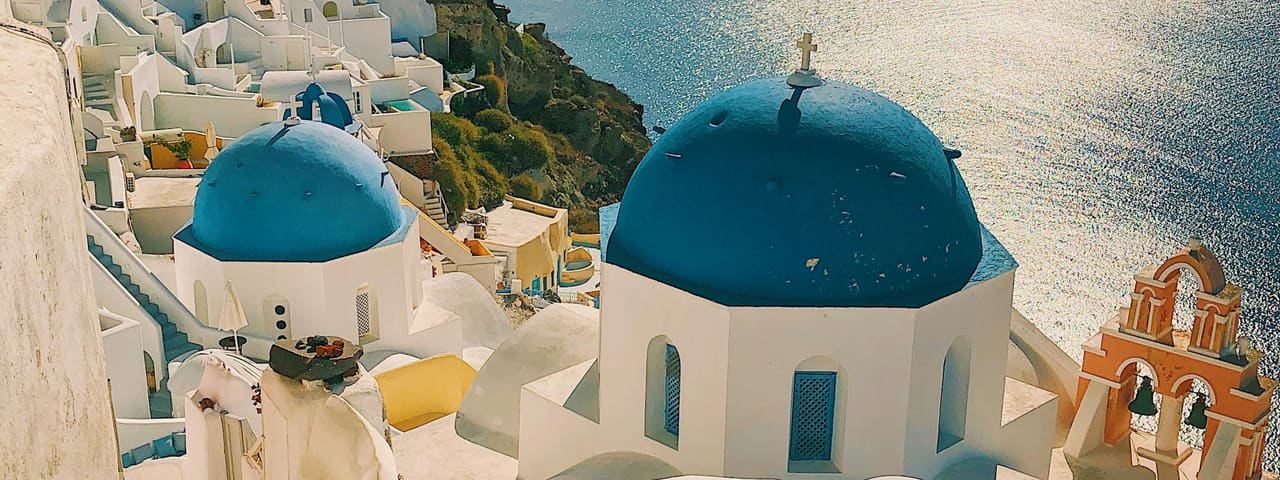
Oia’s captains’ mansions belong alongside the cave-house image in your understanding of the village. The municipal description connects its architecture with shipping history and directs visitors toward the Maritime Museum. That gives the settlement a story extending beyond a sunset photograph.
If maritime history interests you, use a museum visit to add context to the buildings you see outside. Compare the scale and form of different houses rather than assuming every attractive facade represents the same kind of household. Current museum hours should be checked separately; a historical association does not establish year-round public access to a building.
Turn the history into a practical visit
For an introduction, pair Akrotiri with the Museum of Prehistoric Thera, on separate days if that gives each enough time. Add one fortified village and a slower look at Oia’s built heritage. You will encounter different periods and settings rather than collecting archaeological names without context.
Read the official interpretation at each place and separate what is observed from what is reconstructed or debated. Generated illustrations, a romantic legend or a dramatic comparison with another ancient city should not be treated as excavation evidence. The strongest holiday memory may be a small detail you understand clearly, rather than an elaborate story presented with more certainty than its sources support.
Common questions
- Are Akrotiri and Ancient Thera the same place?
- No. Akrotiri is the prehistoric settlement in southwest Santorini. Ancient Thera is the later city on Mesa Vouno in the southeast, with a different historical period and setting.
- Is Fira the same as Ancient Thera?
- No. Fira is Santorini’s current capital. Ancient Thera is a separate archaeological site.
- Where can I learn about Akrotiri without relying only on the excavation?
- The Museum of Prehistoric Thera in Fira complements the site with objects and wall paintings. Check current official opening details before visiting.