SantoWines
Pyrgos
Contact details checked 4 November 2026
Santorini’s wine story begins in the vineyard as well as the glass. The low, coiled vines, volcanic setting and local grape varieties help explain why a visit can offer more than a sequence of samples. Decide whether you want a brief introduction, a closer look at production or time with the landscape, then compare the actual programme and transport arrangements.
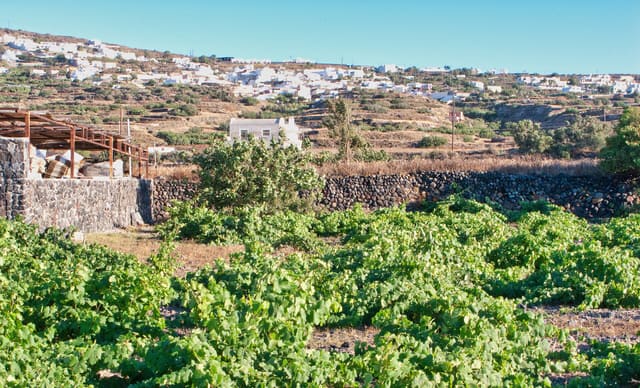
The municipality describes the traditional kouloura method, in which vines are kept low and coiled to help shelter the grapes from wind. The appearance of these vineyards can surprise visitors expecting upright rows. Looking at that form is a useful introduction to the relationship between cultivation and place.
Volcanic soils, aridity and sea humidity are important parts of the island’s wine setting. Avoid reducing that story to a slogan that every bottle or plot is identical. A good explanation should connect a particular vineyard and wine with the choices made by its growers, rather than promising one universal flavour.
Assyrtiko is the leading white grape associated with Santorini. Other local white varieties include Aidani and Athiri. The island also has red varieties and producers working in different styles, so a wine list should not be treated as a row of interchangeable white bottles.
Vinsanto introduces the role of sun-dried grapes and maturation. It is a different style from a dry white and should be understood on its own terms. Read the individual producer and designation, rather than assuming every wine made or sold on the island carries the Santorini protected name.
| What you are comparing | Useful distinction | Question to ask |
|---|---|---|
| A dry white | Grape composition, producer and style | What makes this bottle different from the others? |
| Vinsanto | A style associated with sun-dried grapes | How was it made and matured? |
| A tasting flight | Which wines and how they are explained | Is this an introduction or a more detailed session? |
| A vineyard visit | Actual access to cultivation and landscape | Will we walk among vines or view them from the venue? |
The European Commission’s Santorini PDO specification notice describes grape and production conditions for wines carrying that designation. It is useful evidence that a protected name has a defined meaning, rather than being a general compliment. The latest specification and the actual label should be checked when exact regulatory detail matters.
For most visitors, the practical task is simpler: ask the host to identify the grape, style and designation of what you taste. Keep a note or photograph of the label if you want to find the same bottle later. A familiar island name alone may not be enough to identify it.
Compare a short tasting with a guided production visit, a vineyard explanation or a meal with wine. Establish the length, group size, language, inclusions and whether you need an appointment. A venue can offer more than one format, and a terrace photograph does not tell you which one your booking includes.
For a mixed group, ask whether there are useful alternatives for people who do not want the same tasting. Check any food arrangements and dietary requirements directly. Choose a visit for what it explains and offers, rather than assuming a higher number of samples makes a better experience.
Wineries and wine-related venues are spread across different parts of Santorini. Confirm the exact location, pickup arrangements if offered and where the return finishes. Do not assume that an accommodation collection is available at every address or that a vineyard visit can be reached on foot from any nearby village.
Arrange your onward journey before the tasting and keep the rest of the day realistic. If you also plan a village or archaeological visit, give it its own time and access checks. Outside the main season, confirm operation directly. This page explains wine heritage and visit choices; it does not imply that each business has been personally inspected or that one programme is available year-round.
Public contact details were checked on the businesses’ own websites on 4 November 2026. Inclusion is not an endorsement, a partnership or a guarantee of availability. Confirm services and arrangements directly.
2 businesses
Pyrgos
Contact details checked 4 November 2026Episkopi Gonia
Contact details checked 4 November 2026