Pyrgos: give the hillside village time
Pyrgos offers a different kind of Santorini visit from the caldera-edge settlements. Its hillside setting, Kasteli remains and village streets make the route through the place part of the interest. Choose it for time spent exploring, rather than treating it only as another viewpoint to fit between transfers.
On this page
What makes a Pyrgos visit different
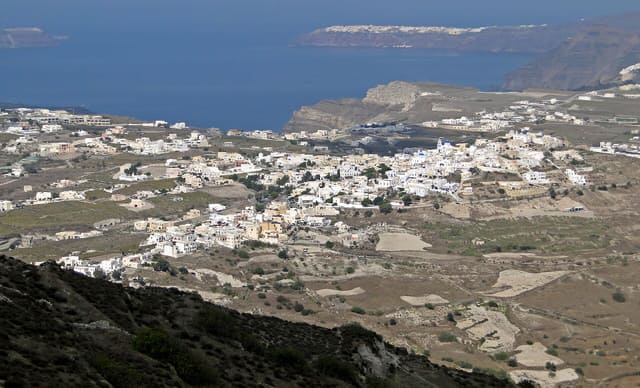
The municipality highlights Pyrgos’s traditional architecture, neoclassical houses and Kasteli remains. Look at how the settlement rises and how the streets relate to its higher parts. You do not need an ambitious checklist to appreciate that structure.
Use the square and the lanes as parts of one visit rather than rushing through them toward a single destination. A pause allows you to notice the surroundings and gives mixed-pace groups a more comfortable rhythm. If everybody wants a different amount of walking, agree on a meeting place before separating.
Plan the walking around the group
A hillside village is not one level surface. Ask about the actual route to an attraction or accommodation if steps, slopes or uneven paving could affect your plans. Being dropped at a village entrance does not necessarily mean being delivered to the doorway you need.
Keep the route adjustable. A visitor who enjoys exploring higher lanes may want a different outing from someone happy with a square, a short stroll and a meal. Both can be worthwhile; the useful decision is to identify the version of Pyrgos that fits your group rather than promising the same route to everyone.
Treat the Kasteli as part of the settlement
The fortified heritage of Pyrgos makes more sense when seen with the village around it. Notice the relationship between enclosed passages, houses and higher positions rather than seeking only a dramatic castle photograph. Read interpretation where it is provided, and keep public access distinct from private homes and religious spaces.
The municipality also points to galleries and museums. Check the particular venue and season if one matters to your plans. A general village page can establish that a cultural place exists; it cannot confirm that the door will be open when you arrive.
Make Pyrgos a coherent part of the day
Pyrgos can serve as an inland contrast during a stay otherwise centred on the caldera. You might give the village the main part of an outing, with time for lunch, or explore it on a day devoted to the island’s landscape and wine heritage. Confirm any tasting appointment and transport separately.
Avoid arranging a tight sequence of village, winery and archaeological stops simply because they appear near one another on a map. Terrain, opening and the time your group wants to spend in each place matter. Choose one principal interest and keep a second stop optional rather than turning the visit into a transfer exercise.
Common questions
- Is Pyrgos on the caldera edge?
- Its appeal is an inland hillside-village setting with island panoramas, rather than the same cliff-edge experience as Oia or Imerovigli.
- How long should I allow for Pyrgos?
- Base the time on the amount of walking, any confirmed venue visit and whether you want a meal. A short square stop and a more detailed hillside exploration are different visits.